10 Paid Media Examples to Inspire You in 2026

By Chris Edington
You know you need paid ads. What stalls many isn't the idea of spending money. It's the blank campaign setup, the audience choices, the creative decisions, and the quiet fear of wasting budget on ads that look fine but don't move anything.
That's where most roundups on paid media examples fall short. They show the ad, maybe name the platform, and stop there. That's not enough if you're trying to decide what to run for a Shopify store, a SaaS funnel, or a property business that needs better leads instead of more junk form fills.
The useful way to study paid media examples is to look at the strategic DNA behind them. What was the objective? Who was the audience? Why did the creative fit that channel? Which KPI mattered? Those are the questions that help you build a campaign that can survive outside a slide deck.
In South Africa, paid media isn't a side tactic anymore. It's a major growth lever. Paid search accounted for 42% of total digital ad expenditure, about R12.5 billion of R29.8 billion in overall digital ad spend, according to Statista data referenced here. That matters because it shows where buyer intent already exists. It also sets the tone for this list. These aren't just attractive ads. They're working models.
Below are 10 paid media examples worth stealing from, adapting, and pressure-testing in your own business.
1. Search & Shopping Ads Google Ads
If someone searches for a specific product, service, or location, Google Ads is still one of the cleanest ways to capture demand that already exists. That's why Search and Shopping often become the first serious paid media examples I show clients who need revenue, not just reach.
For eCommerce, Shopping ads work best when the product feed is tidy and the site experience matches the promise of the ad. For SaaS, search usually performs best around solution-aware keywords, competitor terms, and bottom-funnel queries. For property, location intent is everything. Someone searching for a suburb, development type, or property category is telling you what they want.
What strong setups usually share
A practical example came from a Cape Town Shopify fashion retailer. Market With Boost improved performance by fixing feed issues, using Google Shopping properly, and tightening tracking. That campaign moved from a blended ROAS of 2.1x to 28.6x within 90 days, generating R2.3M revenue from R180K ad spend, according to the provided business context.
The lesson isn't that every brand can replicate that exact outcome. It's that Search and Shopping only shine when the operational pieces are in place.
- Start with intent: Prioritise queries tied to buying behaviour, not broad curiosity.
- Keep the feed clean: Product titles, images, pricing, and availability need to be accurate.
- Track properly before scaling: If conversion tracking is messy, bidding gets messy too.
- Use negatives aggressively: Irrelevant traffic gets expensive fast.
For teams refining their account structure, Market With Boost's guide to digital marketing pay per click is a good place to sharpen the fundamentals.
Practical rule: Search captures demand. It doesn't create desire on its own. If the offer is weak or the landing page leaks trust, paid search just shows you the problem faster.
2. Meta Ads Facebook & Instagram
A prospect taps your Instagram ad on the train, browses two products, gets distracted, and disappears. Later that night, they see a carousel with the exact items they viewed, plus a sharper offer and better social proof. That is where Meta earns budget. It handles discovery, retargeting, and conversion in the same ecosystem, which makes it one of the most flexible paid media examples on this list.
For eCommerce brands, Meta works best when visual appeal drives the click and the account is set up to react quickly. For SaaS, it is usually stronger for lead generation, demo demand, webinar promotion, and retargeting than for cold bottom-funnel conversion. For property businesses, Meta can fill the pipeline fast, but lead quality depends heavily on audience filtering, form design, and follow-up speed.

The strategic DNA matters more than the ad format alone. A strong Meta campaign starts with a clear objective, then matches audience, creative, and KPI to that objective.
A practical eCommerce setup often looks like this. Prospecting campaigns introduce the product through short-form video, UGC-style clips, or carousels built around a single angle. Retargeting then picks up product viewers, cart abandoners, and engaged visitors with dynamic product ads, offer reminders, or trust-building creative. The KPI split should reflect that job. New customer acquisition cost for prospecting. ROAS, purchase volume, and frequency control for retargeting.
SaaS accounts need a different lens. A click-through rate can look healthy while pipeline quality is weak. I usually want Meta judged on qualified lead rate, cost per sales-qualified lead, booked demos, and assisted conversions, not raw lead volume. Lead forms can work, but the trade-off is familiar. Lower friction often brings lower intent. Sending traffic to a focused landing page usually costs more per lead and produces better downstream performance.
Property businesses sit somewhere in the middle. Meta can target by geography, life stage signals, and interest clusters well enough to generate serious enquiry volume, but weak qualification creates wasted follow-up fast. Good operators tighten the form, ask one or two screening questions, and build a follow-up sequence around the submission instead of treating the lead form as the whole strategy. For teams looking at examples in that category, these converting real estate ad strategies are worth reviewing.
A few patterns consistently separate efficient accounts from expensive ones:
- Objective: Choose the conversion event that matches business value, not the easiest vanity metric.
- Audience: Separate cold, warm, and existing customer segments so messaging does not blur.
- Creative: Refresh hooks, visuals, and offers often enough to avoid fatigue and rising CPMs.
- KPI: Measure the number that predicts profit, whether that is MER, qualified pipeline, booked viewings, or actual sales.
Creative fatigue is usually the primary ceiling. Brands often blame targeting when the audience has just seen the same message too many times. Reels placements need pace and a strong first second. Carousels help when comparison sells the offer. Static images still work if the concept is sharp and the value proposition is obvious.
For a more detailed breakdown of platform setup and campaign structure, Market With Boost's guide to social media advertising strategy and execution is a useful reference.
Meta rewards accounts that align objective, audience, creative, and KPI. It gets expensive when teams optimise for cheap clicks, weak leads, or stale ads.
3. TikTok Ads
TikTok is where a lot of brands either break through or burn cash trying to look polished. The platform usually rewards ads that feel native, quick, specific, and human. If the creative looks like a repurposed boardroom asset, people scroll.
In South Africa, TikTok ad spend grew to R2.1 billion in 2024, representing 7% of total digital ad budget, according to DSMN8's referenced statistics page. That growth makes TikTok one of the most important paid media examples for brands targeting younger consumer audiences, especially in eCommerce and lifestyle categories.
Here's the visual language the platform expects:

Native beats polished
The strongest TikTok campaigns usually start with creator-style content, not brand-style content. A skincare brand, fashion retailer, or fitness offer can all work here, but the ad needs a real hook, a clear use case, and pacing that fits the feed.
One gap in a lot of generic paid media advice is that it underplays regional behaviour. In South Africa, post-iOS privacy changes and local disruption patterns have made channel mix more important. One provided market gap notes that some ZA DTC fashion brands have seen stronger returns by prioritising TikTok ahead of Meta in the right context, particularly when TikTok creative is tied to Shopify CRO and short-form retargeting logic.
A few channel truths hold up:
- Lead with the product fast: Don't spend the opening seconds warming up.
- Use creators who already fit the niche: Forced endorsements rarely travel.
- Judge early on watch behaviour: Conversions often lag the first signal set.
- Pair TikTok with retargeting elsewhere: It's strong at discovery, but not always enough alone.
This video gives a useful feel for the kind of platform-native pacing brands need to understand before spending seriously:
4. LinkedIn Ads
LinkedIn is expensive compared with most consumer platforms, and that's exactly why weak strategy gets exposed there fast. If your offer is vague or your targeting is too broad, you'll feel it in the first few days.
Still, it belongs on any serious paid media examples list because when the sale is high value, targeted, and professional, LinkedIn can produce leads that other social platforms struggle to match. SaaS, consulting, recruitment, and property investment all sit comfortably here.
Where LinkedIn earns its keep
A Johannesburg property campaign from Market With Boost is a good example of using LinkedIn for quality over vanity metrics. The business targeted professionals aged 35 to 54 and combined top-funnel LinkedIn Sponsored Content with Google Performance Max and retargeting. That approach reduced cost per qualified lead from R245 to R81 and reached 7.4x ROAS over six months, according to the provided business context.
That kind of result usually comes from tighter qualification, not broader reach. LinkedIn works best when you know the exact seniority, role, and commercial profile you want.
What tends to work:
- Target job function and buying relevance: Don't hide behind broad industry filters.
- Use Lead Gen Forms carefully: They reduce friction, but quality depends on follow-up and form design.
- Promote proof, not hype: Demos, customer logic, and practical outcomes beat slogans.
- Respect the sales cycle: Many LinkedIn leads need nurturing before sales outreach.
A cheap lead that never closes is expensive. LinkedIn often looks costly until you compare lead quality against channels that fill the CRM with noise.
5. Pinterest Ads
Pinterest gets overlooked because it doesn't carry the same noise as Meta or TikTok, but that can be an advantage. People use it differently. They search, save, compare, and plan. That makes it useful for brands selling products tied to taste, aspiration, and future purchase behaviour.
Home décor, fashion, beauty, weddings, food, and lifestyle offers usually fit naturally. Property brands can also use it well when visuals matter and the buyer journey includes a research phase rather than an immediate form fill.

What Pinterest does better than people think
Pinterest often works best when the creative behaves like a useful idea first and an ad second. A kitchen brand can promote recipe-led product discovery. A furniture brand can push room-style boards that lead into product pages. A fashion brand can build themed seasonal collections that capture browsing behaviour before the shopper is ready to buy elsewhere.
What usually improves performance:
- Design for the platform: Vertical images and clean text overlays tend to fit better.
- Think in themes, not single products: Collections often outperform isolated items.
- Use search-aligned language: Pinterest is still heavily intent-driven.
- Expect a longer path: Many users save now and purchase later.
Pinterest rarely wins because it shouted louder. It wins because it showed up while someone was planning.
6. YouTube Ads
YouTube sits in an awkward but valuable middle ground. It can do broad awareness, but it's also strong when buyers need to understand the product before taking action. That makes it useful for SaaS demos, product explainers, home tours, and brand storytelling that needs more than a static image.
Some of the best paid media examples on YouTube don't look expensive. They just get to the point quickly. The first few seconds matter because viewers decide almost immediately whether your ad deserves their attention.
Where YouTube works best
A software company can run a short problem-led video that shows the interface early and lands on a demo CTA. A property brand can use video tours to qualify interest before someone books a viewing. A DTC brand can show the product in use, answer objections visually, and then retarget viewers elsewhere.
A few practical rules matter here:
- Open with the tension: Name the problem or desired result quickly.
- Show the product early: Don't hold back the useful part.
- Use different lengths: Shorter cuts and longer explainers do different jobs.
- Retarget based on engagement: Someone who watched meaningfully is not the same as a cold user.
YouTube works badly when a TV-style ad gets dropped into a performance funnel. It works well when the creative is built for platform behaviour and the landing page finishes the job.
7. Display Network & Programmatic Advertising
Display is where plenty of teams waste budget because they expect cold banner traffic to behave like branded search. It usually won't. Display shines when it supports another channel, especially retargeting, offer reinforcement, and repeated exposure after a user has already shown interest.
That's why I rarely treat display as the hero. I treat it as support with a defined role.
The display example worth copying
For eCommerce, the strongest use case is dynamic remarketing. Someone views a product, leaves, and sees an ad later with the item they considered. For property, display can keep relevant listings or developments in front of users who already visited key pages. For SaaS, it can reinforce category education after a site visit or content download.
A few things keep display useful instead of annoying:
- Focus on warm audiences first: Retargeting usually beats broad prospecting here.
- Cap frequency: Repetition without control creates fatigue fast.
- Use context carefully: Placement quality matters more than raw reach.
- Match message to stage: Cart abandoners need a different prompt from blog readers.
Display should rarely carry the full conversion burden. Its job is usually to remind, reinforce, and bring people back.
8. Email Marketing Paid Distribution & Owned
Email belongs in a list of paid media examples because paid distribution and owned email often work together. You might sponsor a newsletter, place offers through affiliate sends, or pay to acquire subscribers who later convert through your own flows.
The mistake is thinking of email as only retention. It can also be an acquisition assist, a nurture engine, and a profit layer that protects your paid media economics when acquisition costs rise.
Where email pulls more weight than expected
For SaaS, newsletter sponsorships can work when the audience is narrow and commercially relevant. For eCommerce, owned email does a lot of heavy lifting after paid social or paid search introduces the customer. For property, segmented buyer and seller communication can keep leads warm when they're not ready to speak to sales yet.
One operational truth matters more than almost anything else. List quality beats list size.
- Segment by intent: New subscribers, recent buyers, and high-interest leads need different sequences.
- Optimise for mobile: That's table stakes now.
- Measure revenue, not just clicks: Pretty engagement can hide weak commercial value.
- Build your own asset: Rented attention is useful, owned audience is safer.
For brands working in this channel seriously, Market With Boost's article on email marketing South Africa is worth reading.
Field note: Email often looks boring next to social ads. Then it quietly becomes the channel that rescues blended performance after acquisition costs rise.
9. Native Advertising & Sponsored Content
Native advertising works when the content deserves the placement. It fails when the article is a dressed-up sales pitch with a weak landing page behind it.
This is one of the more misunderstood paid media examples because teams often judge it by traffic quality alone. That misses the point. Native and sponsored content are usually better at shaping consideration, educating buyers, and warming an audience before a more direct response channel closes the deal.
What a strong native campaign looks like
A B2B software brand might sponsor a useful article about a process problem its product solves, then retarget engaged readers later. A property company could back educational content on investment logic, location shifts, or buying considerations, then move readers into a more specific lead path. A DTC brand can place lifestyle-led content that feels editorial rather than transactional.
A few rules help:
- Write for the reader first: Utility beats self-promotion.
- Choose relevant publishers: Audience fit matters more than vanity placement.
- Use stronger headlines than your brand team likes: Native still needs a click.
- Plan the second touch: Native often starts the journey, not ends it.
If your brand needs trust before conversion, native can do work that direct ads struggle to do.
10. Influencer Marketing & Affiliate Partnerships
Influencer and affiliate campaigns work best when the partner already has credibility in the exact category you're selling into. They work worst when a brand rents reach without checking whether the audience trusts the person speaking.
That's why some of the strongest paid media examples in this category don't come from celebrity deals. They come from smaller creators, sharper audience fit, better usage rights, and clearer tracking.
What separates good partnerships from expensive noise
A beauty brand can use creators who already teach routines. A fitness brand can work with coaches who show the product inside a believable use case. A tech brand can sponsor reviewers who candidly explain trade-offs instead of reading from a script. Affiliate partners are similar. The best ones behave like publishers or educators, not coupon cannons.
The mechanics matter:
- Prioritise audience relevance: Follower count alone tells you very little.
- Give creators a brief, not a straitjacket: Authenticity dies when copy sounds legal-approved.
- Negotiate usage rights early: Good creator assets often become paid social winners.
- Track post-click value: Some partners drive first orders, others bring better repeat buyers.
This channel is strongest when you treat creators like distribution partners with a point of view, not just ad space with a face.
10 Paid Media Channels Comparison
| Channel | Implementation Complexity 🔄 | Resource Requirements ⚡ | Expected Outcomes 📊 | Speed to Impact ⚡ | Ideal Use Cases 💡 | Key Advantages ⭐ |
|---|---|---|---|---|---|---|
| Search & Shopping Ads (Google Ads) | High, keyword bidding, feed & bid management, continuous optimisation | Moderate‑high budget; product feed, analytics, landing pages, feed tools | Immediate high‑intent conversions and clear ROAS measurement, ⭐⭐⭐⭐⭐ | Fast, immediate traffic and conversions once live | eCommerce, inventory-driven retail, conversion-focused campaigns, SaaS demand capture | High intent audience, measurable ROI, scalable via feeds |
| Meta Ads (Facebook & Instagram) | Medium, pixel setup, audience builds, creative rotation and CBO management | Moderate budget; multiple creative formats (images/videos), pixel, analytics | Strong reach, retargeting conversions and brand lift, ⭐⭐⭐⭐ | Short–medium, fast reach; needs learning for efficiency at scale | DTC/eCommerce, retargeting, audience building, cart recovery | Advanced targeting, broad reach, diverse visual formats |
| TikTok Ads | Medium, native creative requirements, trend alignment, creator coordination | Low‑medium test budgets; vertical video creative, creator fees, pixel | High awareness and engagement with viral potential; conversions variable, ⭐⭐⭐ | Short, potential for fast viral impact but unpredictable | DTC targeting younger audiences, viral campaigns, brand awareness | Low CPMs, strong organic amplification, creator authenticity |
| LinkedIn Ads | High, precise B2B targeting, lead gen flows, CRM integration | High CPC/CPL; professional creative (case studies), lead capture tooling | High‑quality B2B leads and pipeline value at higher cost, ⭐⭐⭐⭐ | Medium–long, longer consideration and nurture cycles | B2B/SaaS, enterprise sales, ABM, executive outreach | Premium professional audience, built‑in Lead Gen Forms, ABM fit |
| Pinterest Ads | Low–medium, visual pin creation, keyword & interest targeting | Low‑medium budget; high‑quality vertical creative, catalog integration | Strong mid‑funnel discovery and consideration traffic, ⭐⭐⭐ | Medium, planning/seasonal cycles mean slower conversions | Home, fashion, beauty, seasonal/trend products, inspiration-driven shopping | High intent for discovery, lower CPCs, strong for visuals |
| YouTube Ads | Medium‑high, video production, format testing, audience targeting | High resources for quality video production; targeting & analytics | Excellent brand awareness and consideration with storytelling, ⭐⭐⭐⭐ | Medium, requires testing and multiple creative lengths | Brand storytelling, product demos, education, long‑form engagement | Massive video reach, storytelling power, Google ecosystem integration |
| Display Network & Programmatic | Medium, DSP/setup, contextual targeting, frequency management | Moderate budget for scale; multiple creatives and placement controls | Broad reach and effective retargeting; lower direct intent conversions, ⭐⭐⭐ | Short–medium, retargeting drives quicker impact; brand lift slower | Top‑funnel reach, retargeting, brand awareness at scale | Massive scale, flexible formats, cost‑efficient reach and retargeting |
| Email Marketing (Paid Distribution & Owned) | Low–medium, ESP setup, segmentation, automation | Low cost for owned lists; tools (ESP), creative & data management | Very high ROI on quality lists; strong retention and direct response, ⭐⭐⭐⭐⭐ | Fast, owned list campaigns convert quickly; sponsorships vary | Customer retention, nurturing, direct response, owned audience activation | Direct access to engaged users, personalisation, measurable revenue |
| Native Advertising & Sponsored Content | Medium, content creation, publisher partnerships, attribution | Moderate budget for content & placements; editorial collaboration | Higher engagement and consideration lift; brand/authority gains, ⭐⭐⭐ | Medium–long, consideration effects build over time | Thought leadership, content marketing, mid‑funnel consideration | Blends with editorial, reduces ad‑blindness, strong contextual relevance |
| Influencer Marketing & Affiliate Partnerships | Medium, creator vetting, contracts, performance tracking | Variable budgets; creator fees or commissions, tracking tools | Authentic reach and high engagement; conversion performance varies, ⭐⭐⭐⭐ | Short–medium, can drive quick sales if aligned | DTC/lifestyle, product launches, social proof and niche audiences | Authentic endorsements, niche audience access, flexible payment models |
Your Next Move From Inspiration to Implementation
The useful takeaway from these paid media examples isn't that every brand should rush onto every platform. It's that each channel plays a different role in the customer journey, and campaigns perform better when you build around that reality instead of chasing whatever feels current.
Search and Shopping are strong when demand already exists and your tracking is clean. Meta is powerful when your creative system is alive and your audience structure makes sense. TikTok can enable rapid discovery, but only if the content feels native to the platform. LinkedIn rewards precision and punishes lazy targeting. Pinterest, YouTube, display, email, native, and creator partnerships all have a place when the business understands what job each one is doing.
That's the pattern behind good paid media examples. The win rarely comes from one clever ad. It comes from matching channel to objective, audience to message, and creative to buying stage. When those pieces line up, performance gets easier to improve because you're working with user behaviour instead of fighting it.
For eCommerce brands, that usually means connecting acquisition to catalogue quality, landing page speed, and checkout conversion. For SaaS, it means judging campaigns on pipeline quality and sales progression, not just form volume. For property businesses, it means filtering for real intent and building retargeting paths that help prospects move from curiosity to enquiry.
The behind-the-scenes truth is less glamorous than most marketing content makes it sound. Strong paid media work is usually a mix of audience discipline, clean data, good offers, fast landing pages, and constant creative testing. It isn't magic. It's alignment.
If you're comparing channels because growth has flattened, start with the bottleneck. If search traffic converts but scale is limited, expand discovery channels. If social clicks are cheap but sales are weak, fix the onsite journey. If lead volume looks healthy but close rates don't, revisit targeting and qualification. That's the kind of diagnosis that saves budget.
And if you need outside perspective, get one. Teams often move faster when someone can separate signal from noise and tell them which parts of the system are underperforming. If you're also exploring the wider funding and growth ecosystem around digital channels, this list of firms can help you find United States social media marketing VCs.
The best paid media strategy isn't the busiest one. It's the one that knows what to test next, what to cut, and what to scale.
If you want help turning these paid media examples into a working growth plan, Market With Boost can help. The team builds paid media and CRO strategies for eCommerce, SaaS, and property brands that need clearer data, better lead quality, and stronger revenue from the traffic they already pay for.

Written by
Chief Executive Officer
Chris heads the Boost Marketing team and is also CEO and CTO of Shopstar, with over ten years of digital marketing experience. Before these roles, Chris co-founded MADE Agency, a leading South African digital marketing agency, collaborating with renowned clients like BMW, Red Bull, and Pepsi. He has a deep understanding of eCommerce and a talent for identifying emerging trends.

Scale your performance with data-driven insights
Ready to apply these insights to your business? Hannah can walk you through how we'd approach your specific situation.
Hannah Merzbacher
Operations Manager
Continue reading
View all insights
Advertising on Amazon South Africa: A practical guide with examples for brands
Creating a successful advertising strategy on Amazon's South African marketplace requires a deep understanding of the various advertising options avai...
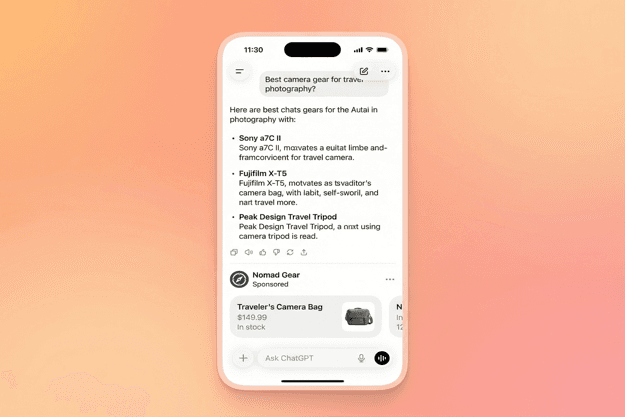
ChatGPT Ads Are Coming: What Brands Need to Know About OpenAI's Advertising Platform
OpenAI has announced the launch of advertising on ChatGPT, marking a pivotal moment in digital advertising. With 700+ million weekly users and 2.5 bil...
7 Cost-effective marketing strategies for small businesses
There is a world of digital tools and strategies that reward small B2B and B2C enterprises focused on serving their customers with an excellent produc...